Published by The Cosmic Wanderer | Reading Time: 4 minutes
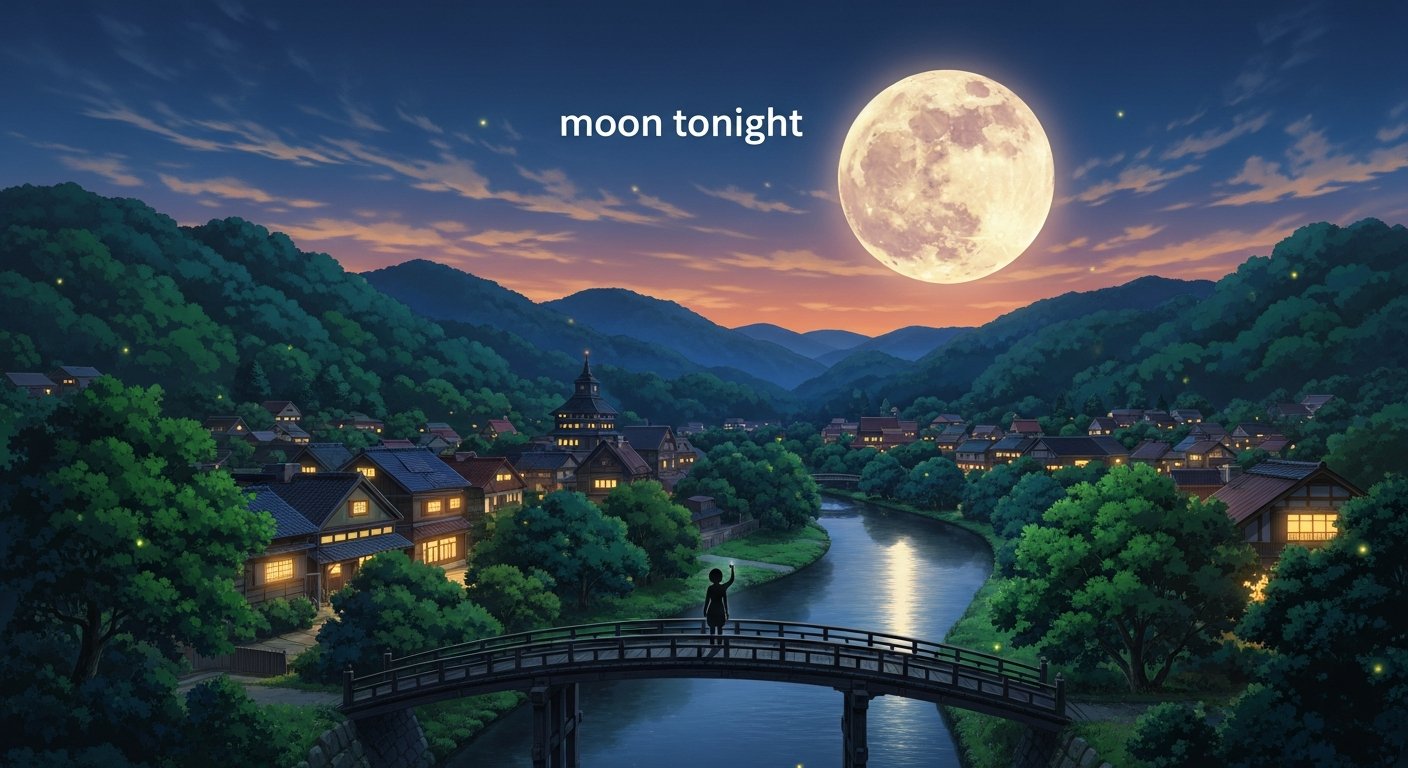
Have you looked out your window yet? There is something universally grounding about stepping outside, lifting your eyes to the night sky, and finding our glowing celestial neighbor looking back at us. Whether it’s a tiny silver sliver of a crescent or a brilliant, blazing full orb casting shadows across your yard, the moon tonight is putting on a unique show.
But what phase are we looking at right now, and how can you get the absolute best view of it? Grab a warm mug of tea, and let’s explore the magic waiting for you in the night sky tonight.
The Moon is a cosmic shape-shifter. Because it locks orbits with Earth, we always see the same face, but the sunlight hitting it changes day by day in a 29.5-day cycle. Depending on where we are in the lunar month, tonight you might be seeing:
To find out the exact phase, illumination percentage, and moonrise time for your specific zip code tonight, we highly recommend checking a quick live tracker like TimeandDate's Moon Tracker before you head out!
You don't need expensive equipment to appreciate the moon, but a few simple tricks can elevate your viewing experience from "neat" to "breathtaking":
When you gaze at the moon tonight, you are looking at a history book written in dust and basalt. But there are two fascinating phenomena that dictate exactly how the moon appears to us on any given night: Albedo and Libration.
Even though the moon tonight might look brilliant enough to read a book by, it actually has a very low albedo (reflectivity). The moon's surface is made of dark, volcanic basalt and powdery regolith, reflecting only about 12% of the sunlight that hits it. This is roughly equivalent to the reflectivity of worn asphalt! It only looks dazzlingly bright because it is set against the pitch-black void of space.
While we say we only ever see one side of the moon, that's not 100% true. Because the moon's orbit is elliptical and tilted, it gently nods up and down and shakes left to right over the course of a month. This "wobble" is called libration. Because of libration, we actually get to see about 59% of the moon's surface over time, rather than just 50%. Tonight, you might be catching a glimpse of a crater on the extreme edge that is usually hidden from Earth's view!
To truly appreciate the physics of this cosmic dance, watch this incredible visual breakdown of how the moon moves, wobbles, and changes phases over the course of a year:
The moon tonight is a bridge to our ancestors, who looked up at the exact same craters and mapped their seasons, crops, and mythologies by its glow. No matter what phase it's in, it is a reminder of our place in a vast, beautiful universe.
So, what are you waiting for? Throw on a jacket, step out into the night air, and look up. Happy stargazing!