The Dawn of 'Opus-Class' AI: SpaceXAI Disrupts the Frontier with Grok 4.5 Silicon Valley — July 9, 2026 — In a move that has sent shockwaves through the artificial intelligence industry, Elon Musk’s tech company, SpaceXAI, officially released its highly anticipated next-generation model yesterday. Debuting on Wednesday, July 8, 2026, Grok 4.5 represents a massive leap forward in the frontier LLM landscape. Musk has boldly characterized the release as an "Opus-class model," a term reserved for systems that redefine the absolute limits of machine intelligence, reasoning, and multimodal synthesis. For months, the AI industry has grappled with the skyrocketing energy and financial costs of training and running frontier models. Yesterday's release addresses this bottleneck head-on, promising a cheaper, highly efficient alternative to the world's most powerful models without sacrificing the raw intellectual capabilities expected of a top-tier system. The Cor...
The Core Update: A Legacy of Service and Screen Iconography Passes at 80 In a solemn moment for both television history and the global first responder community, actor Randolph Mantooth, forever etched into the cultural fabric as the charismatic firefighter-paramedic Johnny Gage on the seminal 1970s drama Emergency! , has passed away at the age of 80. The news was confirmed today, Saturday, July 11, 2026, by his sister, Tonya Mantooth, in a statement to USA TODAY. Mantooth’s passing marks the end of an era for an actor who was far more than a prime-time star. Through his portrayal of Gage from 1972 to 1977, Mantooth did not merely entertain millions; he served as the public face of a revolution in emergency medical services (EMS). His death has prompted an outpouring of grief and remembrance from generations of firefighters, paramedics, and medical professionals who trace the very existence of their careers back to his work on the screen. The Root Cause of the Public Outpouring:...
Posted: Monday, July 06, 2026 Urgent Public Health Alert: Legionnaires’ Outbreak Strikes NYC’s Upper East Side, 14 Cases Confirmed New York City’s Upper East Side is currently grappling with a significant public health challenge as local health officials actively investigate a confirmed outbreak of Legionnaires’ disease. As of today, Monday, July 06, 2026, a total of 14 individuals have been sickened across several Upper East Side ZIP codes. Authorities are working diligently to pinpoint the precise source of the contamination, which remains elusive at this time. This emerging situation underscores the persistent threat posed by environmental pathogens, even in one of the world's most advanced urban centers. The Core Update: Navigating the Immediate Threat The revelation of 14 confirmed Legionnaires’ disease cases within a concentrated area of the Upper East Side has prompted an urgent response from the city’s health apparatus. The fact that the ...
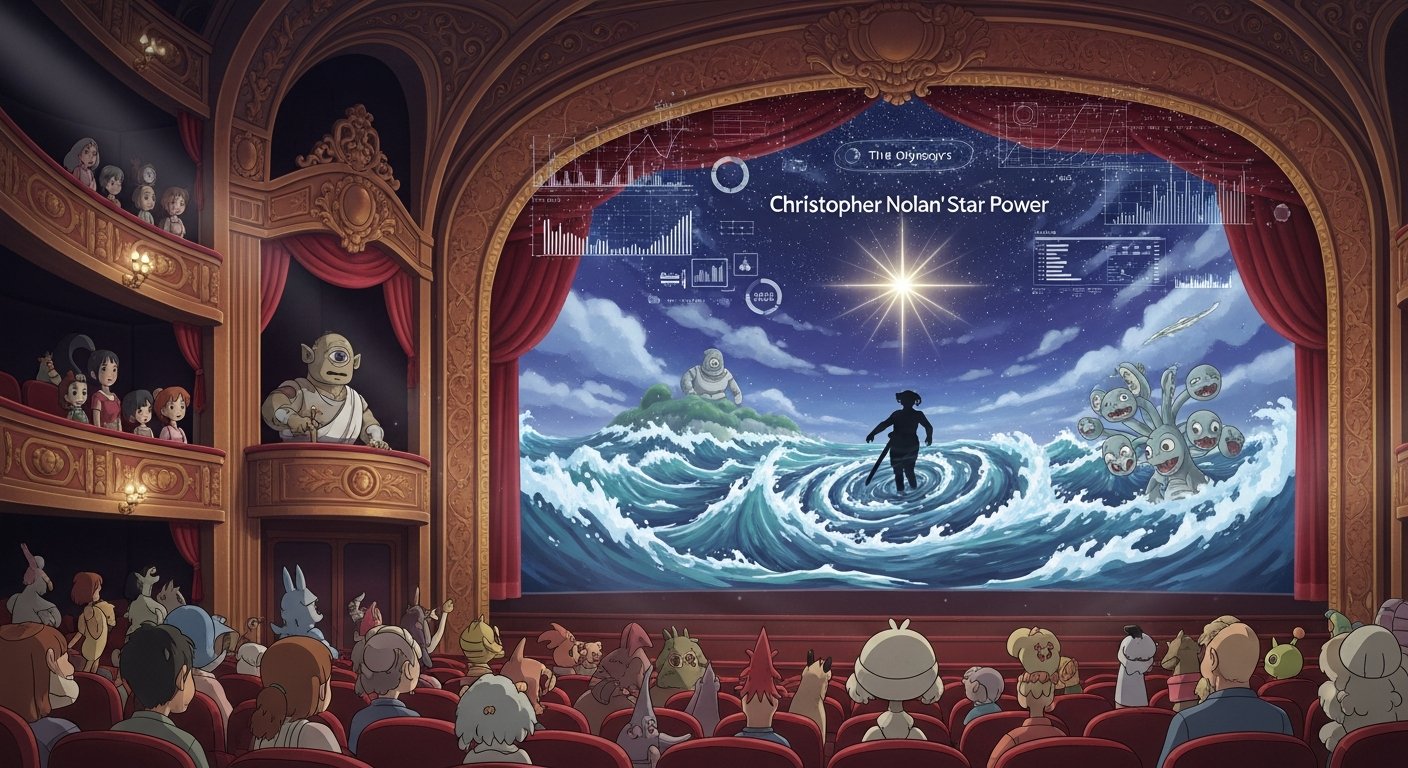
Early Data for The Odyssey Confirms Christopher Nolan’s Unrivaled Box Office Power
GoInfoGuide
The Auteur as the Ultimate IP: Early Tracking for 'The Odyssey' Redefines 2026 Box Office Expectations
In an era where franchise fatigue is no longer a quiet worry but a loud, balance-sheet-bruising reality, Hollywood has been searching for a reliable formula to draw audiences back to premium screens. Today, on July 14, 2026, we received the clearest indication yet of where the industry’s true gravity lies. The first wave of early tracking data for Christopher Nolan’s highly anticipated film, 'The Odyssey', has begun circulating through major exhibition and studio circles, and the numbers present a staggering narrative.
According to initial tracking metrics, 'The Odyssey' is comfortably outpacing rival summer and autumn tentpoles in both "urgency" and "casual-audience interest." In a theatrical landscape increasingly bifurcated between niche cinephile offerings and struggling legacy sequels, this early data does more than just project a massive opening weekend; it confirms Christopher Nolan’s singular status as a self-sustaining blockbuster brand.
The Core Update: Breaking Down the Early Metrics
The early data points to a rare dual-engine driver for 'The Odyssey'. Typically, high-concept, auteur-driven films score well in "definite interest" among cinephiles and urban markets but lag in broad-spectrum appeal. Conversely, major studio IP tentpoles often capture casual audiences but lack a sense of immediate urgency—leading to soft opening weekends and a reliance on long-tail international runs.
Nolan’s latest offering is defying these traditional curves. The proprietary tracking reports reveal two critical dynamics:
The Urgency Factor: 'The Odyssey' is registering "must-see-opening-weekend" urgency levels that eclipse major franchise installments scheduled for the same quarter. This suggests that audiences view a new Nolan film not merely as a movie, but as a cultural event that demands immediate participation to avoid spoilers and be part of the global conversation.
Casual-Audience Penetration: Most tellingly, interest in the film has leaked far beyond the traditional film-buff demographic. Casual moviegoers—those who typically only visit a theater once or twice a year for major cultural phenomena—are showing tracking engagement levels comparable to the historic run of 'Oppenheimer'.
Core Concepts: The Mechanics of the "Nolan Premium"
To understand why these early numbers are sending shockwaves through exhibition executive suites, one must look at how movie marketing mechanics have shifted. Historically, studios relied on recognizable intellectual property (IP)—comic books, toy brands, or decades-old nostalgia—to guarantee baseline casual-audience interest. The IP did the heavy lifting, reducing the financial risk of nine-figure production budgets.
Christopher Nolan has inverted this dynamic. Over the last two decades, he has systematically built a personal brand that functions identically to a multi-billion-dollar IP. The mechanics of this "Nolan Premium" rely on three distinct pillars:
The Promise of Scale and Spectacle: Audiences associate Nolan’s name with practical effects, massive IMAX sequences, and a refusal to rely on green-screen aesthetics. This creates a baseline expectation of a premium experience that cannot be replicated at home, driving high-ticket IMAX and PLF (Premium Large Format) presales.
Intellectual Credibility: Unlike standard popcorn fare, Nolan’s narratives demand active cognitive engagement. Whether navigating time dilation, dream architecture, or historical gravity, the casual audience feels intellectually stimulated, elevating the film from mere entertainment to a badge of cultural engagement.
Unmatched Studio Backing: By commanding total creative control and securing unprecedented marketing pushes, Nolan ensures his original concepts receive the kind of global saturation typically reserved only for established cinematic universes.
Global Impact: Why This Matters to the Theatrical Ecosystem Today
The stellar early tracking for 'The Odyssey' arrives at a pivotal moment for global cinema. As exhibitors navigate the mid-point of 2026, the traditional pillars of the box office have shown signs of wear. Audiences are increasingly discerning, rejecting formulaic studio outputs and demanding distinct, high-quality theatrical experiences.
For theater owners, the "urgency" metric is the lifeblood of the theatrical window. High urgency translates to robust advance ticket sales, which allows exhibitors to optimize showtimes, maximize concessions revenue, and secure long-term holdovers in their highest-grossing premium auditoriums. If 'The Odyssey' continues on this trajectory, it will provide a massive financial anchor for the entire exhibition sector, proving that original, filmmaker-driven narratives are still the most potent weapon in the theatrical arsenal.
Furthermore, this data will inevitably influence studio greenlight decisions for the remainder of the decade. A resounding success for 'The Odyssey' reassures nervous studio executives that investing hundreds of millions of dollars in original, non-IP concepts is not just a prestige play, but a highly lucrative, repeatable business model—provided they back visionaries capable of capturing the public imagination.
It seems there is something wrong with your internet connection. Please connect to the internet and start browsing again.
AdBlock Detected!
We have detected that you are using adblocking plugin in your browser. The revenue we earn by the advertisements is used to manage this website, we request you to whitelist our website in your adblocking plugin.
Site is Blocked
Sorry! This site is not available in your country.