The Dawn of 'Opus-Class' AI: SpaceXAI Disrupts the Frontier with Grok 4.5 Silicon Valley — July 9, 2026 — In a move that has sent shockwaves through the artificial intelligence industry, Elon Musk’s tech company, SpaceXAI, officially released its highly anticipated next-generation model yesterday. Debuting on Wednesday, July 8, 2026, Grok 4.5 represents a massive leap forward in the frontier LLM landscape. Musk has boldly characterized the release as an "Opus-class model," a term reserved for systems that redefine the absolute limits of machine intelligence, reasoning, and multimodal synthesis. For months, the AI industry has grappled with the skyrocketing energy and financial costs of training and running frontier models. Yesterday's release addresses this bottleneck head-on, promising a cheaper, highly efficient alternative to the world's most powerful models without sacrificing the raw intellectual capabilities expected of a top-tier system. The Cor...
Posted: Monday, July 06, 2026 Urgent Public Health Alert: Legionnaires’ Outbreak Strikes NYC’s Upper East Side, 14 Cases Confirmed New York City’s Upper East Side is currently grappling with a significant public health challenge as local health officials actively investigate a confirmed outbreak of Legionnaires’ disease. As of today, Monday, July 06, 2026, a total of 14 individuals have been sickened across several Upper East Side ZIP codes. Authorities are working diligently to pinpoint the precise source of the contamination, which remains elusive at this time. This emerging situation underscores the persistent threat posed by environmental pathogens, even in one of the world's most advanced urban centers. The Core Update: Navigating the Immediate Threat The revelation of 14 confirmed Legionnaires’ disease cases within a concentrated area of the Upper East Side has prompted an urgent response from the city’s health apparatus. The fact that the ...
The Core Update: A Legacy of Service and Screen Iconography Passes at 80 In a solemn moment for both television history and the global first responder community, actor Randolph Mantooth, forever etched into the cultural fabric as the charismatic firefighter-paramedic Johnny Gage on the seminal 1970s drama Emergency! , has passed away at the age of 80. The news was confirmed today, Saturday, July 11, 2026, by his sister, Tonya Mantooth, in a statement to USA TODAY. Mantooth’s passing marks the end of an era for an actor who was far more than a prime-time star. Through his portrayal of Gage from 1972 to 1977, Mantooth did not merely entertain millions; he served as the public face of a revolution in emergency medical services (EMS). His death has prompted an outpouring of grief and remembrance from generations of firefighters, paramedics, and medical professionals who trace the very existence of their careers back to his work on the screen. The Root Cause of the Public Outpouring:...
Why Gen Z is trading the dance floor for a surprising new kind of clubbing
GoInfoGuide
The New Friday Night: Why India’s Gen Z is Swapping Raves for Spiritual Chants
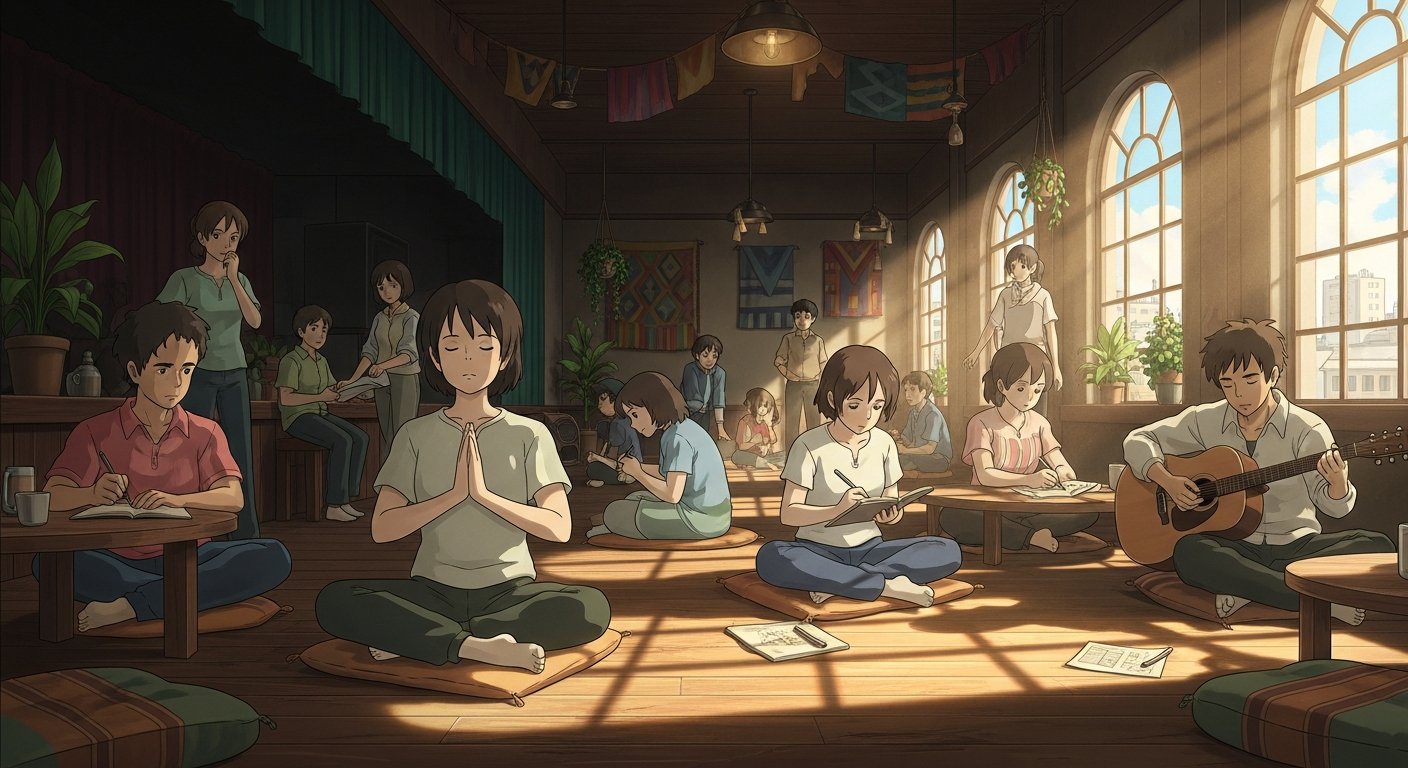
A quiet yet profound cultural shift has reached a tipping point across India’s metropolitan hubs. On any given weekend in cities like Mumbai, Bengaluru, and Delhi, the long queues of young adults are no longer just snaking around the entrances of high-end, alcohol-fueled nightclubs. Instead, India’s Gen Z is packing into transformed warehouses, community spaces, and even traditional venues for an entirely different kind of collective experience: spiritual clubbing.
This emerging movement swaps high-priced spirits for herbal elixirs, and techno drops for high-tempo devotional chanting (kirtans and bhajans) backed by electronic synths. It is a phenomenon where the atmosphere mimics the electric euphoria of a music festival, but the core focus is entirely on prayer, mindfulness, and collective spiritual release. For a generation widely characterized by digital fatigue and rising mental health challenges, this new wave of nightlife represents a major evolutionary leap in how young Indians socialize.
The Core Mechanics: How Devotional Clubbing Works
At first glance, these gatherings share the production DNA of a modern electronic music event. However, the operational and philosophical underpinnings are radically different. The mechanics of these spiritual clubbing experiences are built on several key pillars:
The Sonic Fusion: The soundtrack of these nights is not traditional temple music, nor is it standard club EDM. DJs and live musicians blend ancient Sanskrit mantras, Sufi poetry, and traditional bhajans with modern electronic genres like organic house, ambient techno, and synth-wave. The result is a hypnotic, high-energy acoustic landscape that facilitates both dance and meditation.
Sober and Conscious Spaces: Unlike traditional nightlife, which relies heavily on alcohol sales to sustain profitability, these events operate under a strict sober policy. Venues serve natural alternatives such as ceremonial cacao, adaptogenic mocktails, and kombucha, focusing on sustained natural energy rather than substance-induced highs.
Sensory and Visual Design: The aesthetic is a curated mix of the sacred and the futuristic. Multi-sensory elements are heavily utilized, combining state-of-the-art projection mapping of sacred geometry, laser light shows, and immersive soundscapes with the organic aroma of camphor, dhoop, and high-grade incense.
Active Collective Participation: In a standard club, patrons are largely passive consumers of music. In spiritual clubbing, the line between performer and audience is blurred. Attendees are encouraged to actively sing along, participate in call-and-response chanting, and engage in ecstatic dance, fostering a deep sense of tribal connection.
Market Impact: The Economic Re-routing of Youth Nightlife
This shift from "party to prayer" is not just a passing lifestyle trend; it is actively reshaping the experience economy and nightlife industry across India. Traditional nightlife operators are observing a notable stagnation in alcohol consumption among younger demographics, prompting a pivot in business models to capture this wellness-driven cohort.
For the hospitality and events sector, the rise of conscious gathering presents both a challenge and an unprecedented opportunity. Event promoters who previously relied solely on liquor sponsorships are now partnering with organic food brands, wellness applications, and holistic health platforms. Venues that once sat empty during daylight hours or early evening slots are finding highly profitable utility by hosting spiritual clubbing sessions that wrap up before midnight, allowing attendees to respect their circadian rhythms.
Furthermore, this trend has democratized spiritual gatherings, stripping them of rigid, orthodox formalities and repackaging them into highly accessible, culturally relevant formats. For Gen Z, this represents the ultimate synthesis of identity: maintaining a deep, respectful connection to their cultural and spiritual heritage while unapologetically embracing modern urban lifestyles.
Ultimately, the rise of spiritual clubbing proves that the desire for connection, release, and transcendence remains as strong as ever. However, the path to achieving it has changed. For India's youth, the ultimate escape is no longer about numbing the senses, but rather awakening them together.
It seems there is something wrong with your internet connection. Please connect to the internet and start browsing again.
AdBlock Detected!
We have detected that you are using adblocking plugin in your browser. The revenue we earn by the advertisements is used to manage this website, we request you to whitelist our website in your adblocking plugin.
Site is Blocked
Sorry! This site is not available in your country.